


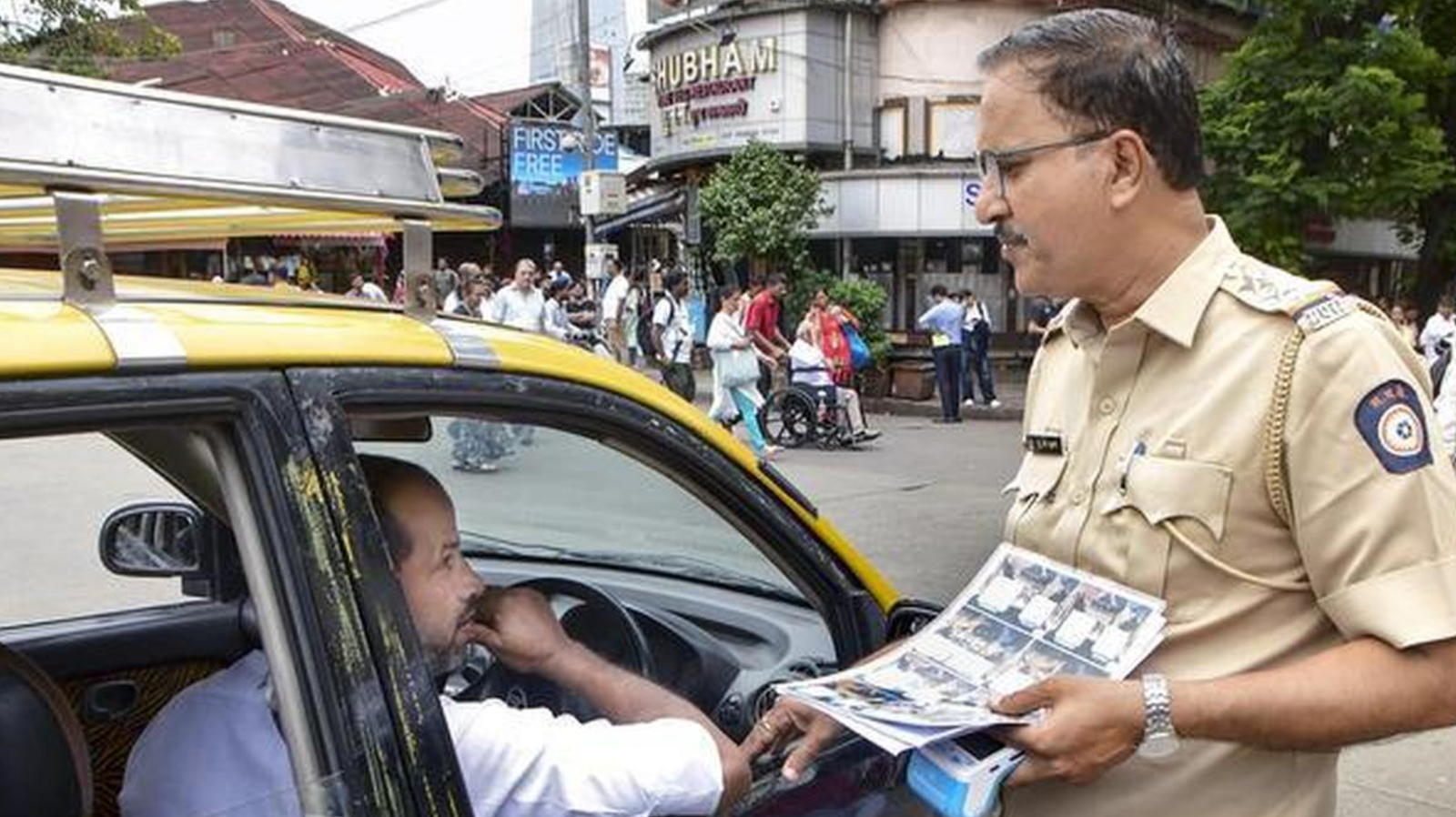
Regional Transport Offices across Maharashtra have issued notices to autorickshaw, taxi and app-based cab drivers who failed to demonstrate a working knowledge of Marathi. The drivers have been asked to improve their practical Marathi language skills within the specified period.
Marathi Language Test Sparks Debate in Mumbai, Over 2,500 Auto and Taxi Drivers Issued Notices
The issue of Marathi language proficiency among auto-rickshaw, taxi and app-based cab drivers in Maharashtra has sparked a fresh debate, particularly in Mumbai. More than 2,500 drivers have reportedly been issued notices after they failed to demonstrate an adequate working knowledge of Marathi during inspections conducted by transport authorities.
The notices were issued as part of a statewide inspection campaign aimed at checking compliance with language-related requirements for commercial passenger vehicle drivers. During the inspections, officials assessed whether drivers could understand and communicate in practical Marathi used in everyday interactions with passengers.
Drivers who were found lacking the required language skills have been asked to improve their Marathi within the prescribed period. The move has triggered dissatisfaction among a section of auto and taxi drivers, who have raised concerns about the manner in which the language requirement is being enforced.
The controversy is particularly significant in Mumbai, where thousands of auto-rickshaw and taxi drivers provide daily transportation services to residents and visitors. A large number of drivers come from different parts of the country and have different linguistic backgrounds. Many have been working in Mumbai for years and argue that they should be given adequate time and clear guidelines to meet the language requirement.
Driver representatives have said that they are not opposed to learning Marathi. However, they have questioned the inspection process and the manner in which notices are being issued. According to them, language learning should be encouraged through a reasonable and practical process rather than becoming a reason for drivers to face difficulties in continuing their livelihood.
Transport authorities, meanwhile, maintain that drivers involved in public transport should have sufficient knowledge of the local language to communicate effectively with passengers. Auto-rickshaw and taxi drivers regularly interact with people from different backgrounds, and basic Marathi communication can help them understand addresses, directions, destinations and other routine instructions.
The issue has also raised questions about the balance between local language requirements and employment opportunities. Supporters of the requirement argue that knowledge of Marathi is important for people providing public services in Maharashtra. They believe that drivers should be able to communicate with passengers in the local language, particularly in situations where clear communication is necessary.
Opponents of the current enforcement approach, however, say that the implementation should be more flexible. They argue that drivers should be provided with sufficient training, learning resources and time before strict action is taken against them.
The possibility of legal action is also being discussed among sections of the driver community. Some drivers and their representatives are reportedly considering approaching the Bombay High Court to challenge or seek clarification on aspects of the language requirement and its enforcement.
If the matter reaches the court, several questions could come under scrutiny, including the legal basis of the language requirement, the procedure followed during inspections, the criteria used to assess Marathi proficiency and the consequences faced by drivers who fail to meet the required standard.
For Mumbai’s transport system, the issue is important because auto-rickshaws and taxis remain a major part of everyday commuting. Any regulatory change affecting drivers can have an impact not only on their livelihoods but also on passengers who depend on these services.
Drivers have emphasized that they are willing to improve their Marathi skills but want a transparent and practical mechanism to do so. They have also called for sufficient time and proper guidance so that language requirements do not suddenly affect their ability to work.
The language debate in Maharashtra is not new, but the latest inspection campaign has brought the issue back into the spotlight. While the government and transport authorities are focusing on compliance with local language requirements, driver groups are seeking clarity over how the rules should be implemented.
For now, the drivers who have received notices are expected to take steps to improve their practical Marathi language skills within the specified timeframe. The next phase of the inspection campaign and any possible legal challenge could determine how the requirement is implemented across Mumbai and other parts of Maharashtra.
The developments have once again highlighted the need to find a balance between promoting the use of Marathi, ensuring effective communication in public transport and protecting the livelihood of thousands of commercial drivers working across the state.
Maharashtra Marathi Language Drive: 1.5 Lakh Drivers Learn Marathi, 7,750 Fail Test and Must Reappear
A large-scale Marathi language initiative in Maharashtra has seen around 1.5 lakh drivers learn the local language, while 7,750 drivers who appeared for the proficiency test failed and will now have to take the examination again.
The development comes amid increased attention on Marathi language proficiency among drivers working in the state’s public and commercial transport sector. The initiative is aimed at ensuring that drivers who regularly interact with passengers are able to understand and communicate in Marathi during their daily work.
According to the information available, a significant number of drivers who previously did not have sufficient knowledge of Marathi have now undergone language learning and training. The effort has been particularly relevant for drivers operating autorickshaws, taxis and other passenger transport services, where communication with customers is an important part of the job.
The language initiative has also included a proficiency examination to assess whether drivers have acquired adequate practical knowledge of Marathi. While a large number of drivers successfully learned the language and participated in the assessment process, 7,750 candidates were unable to clear the test.
Drivers who failed the examination will be given another opportunity to demonstrate their language skills. They will have to appear for the test again after preparing for the required level of Marathi proficiency.
The focus of the examination is understood to be practical communication rather than advanced academic Marathi. Drivers need to be able to understand and use commonly spoken Marathi in situations that arise during their daily work. This can include communicating with passengers, understanding addresses and destinations, responding to routine questions and following basic instructions.
For drivers, knowledge of the local language can be particularly useful in busy cities such as Mumbai, Pune and other urban centres, where passengers come from a wide range of linguistic backgrounds. Being able to communicate in Marathi can make routine interactions easier and potentially reduce misunderstandings between drivers and passengers.
The latest figures also indicate the scale of the language-learning effort. With around 1.5 lakh drivers learning Marathi, the initiative represents a significant attempt to increase local-language proficiency among people working in the transport sector.
However, the requirement has also generated debate among sections of the driver community. Some drivers have welcomed the opportunity to learn Marathi but have expressed concerns about the examination process and the consequences of failing the test. Drivers from different states and linguistic backgrounds may require additional time and support to become comfortable with spoken Marathi.
Supporters of the initiative argue that drivers providing public-facing services should have a basic understanding of the local language. They believe that language proficiency can improve communication and make transportation services more convenient for passengers.
The issue has gained further attention following notices issued to drivers who were found to lack adequate practical Marathi skills during inspections. The inspections have brought the language requirement into sharper focus, particularly among autorickshaw, taxi and app-based cab drivers.
The authorities’ approach appears to place emphasis on learning and improvement rather than simply penalising drivers. The opportunity to retake the examination gives unsuccessful candidates another chance to meet the required standard.
For the 7,750 drivers who did not pass the test, the next step will be preparation for the re-examination. They will need to improve their understanding of everyday Marathi and demonstrate that they can communicate effectively in common situations.
The development is also significant from the perspective of Maharashtra’s broader language policy. Marathi is the state’s official language, and efforts to encourage its practical use have periodically involved different sectors of public life. The transport sector is particularly visible because drivers interact with thousands of people every day.
At the same time, the implementation of language requirements needs to consider the realities faced by workers. Many commercial drivers depend on daily earnings and may find it difficult to attend lengthy training programmes or repeatedly take examinations. Providing accessible learning opportunities and clear information about the test can therefore be important for the success of the initiative.
The large number of drivers who have already learned Marathi suggests that many workers are willing to acquire the required language skills when training and opportunities are available. The fact that thousands will be given another chance to take the examination could also help ensure that the process remains focused on improving communication rather than merely issuing penalties.
For passengers, better Marathi communication among drivers could make everyday travel easier, especially when discussing destinations, routes, fares and other basic travel requirements. It may also help drivers understand local directions and respond more effectively to passengers who prefer communicating in Marathi.
The next phase will focus on the drivers who were unable to clear the examination. Their performance in the re-test will provide a clearer picture of how effectively the language-learning programme is working and how many drivers ultimately achieve the required level of proficiency.
The Marathi language initiative among drivers has therefore become an important development in Maharashtra’s transport sector. With around 1.5 lakh drivers having learned Marathi and 7,750 preparing to take the test again, the focus is now on the next round of examinations and continued language training.
The broader objective remains practical communication. If drivers can confidently understand and speak everyday Marathi, the initiative could help improve interaction between transport workers and passengers while also strengthening the use of the local language in daily public services.
Chief Editor: Vijay Kumar